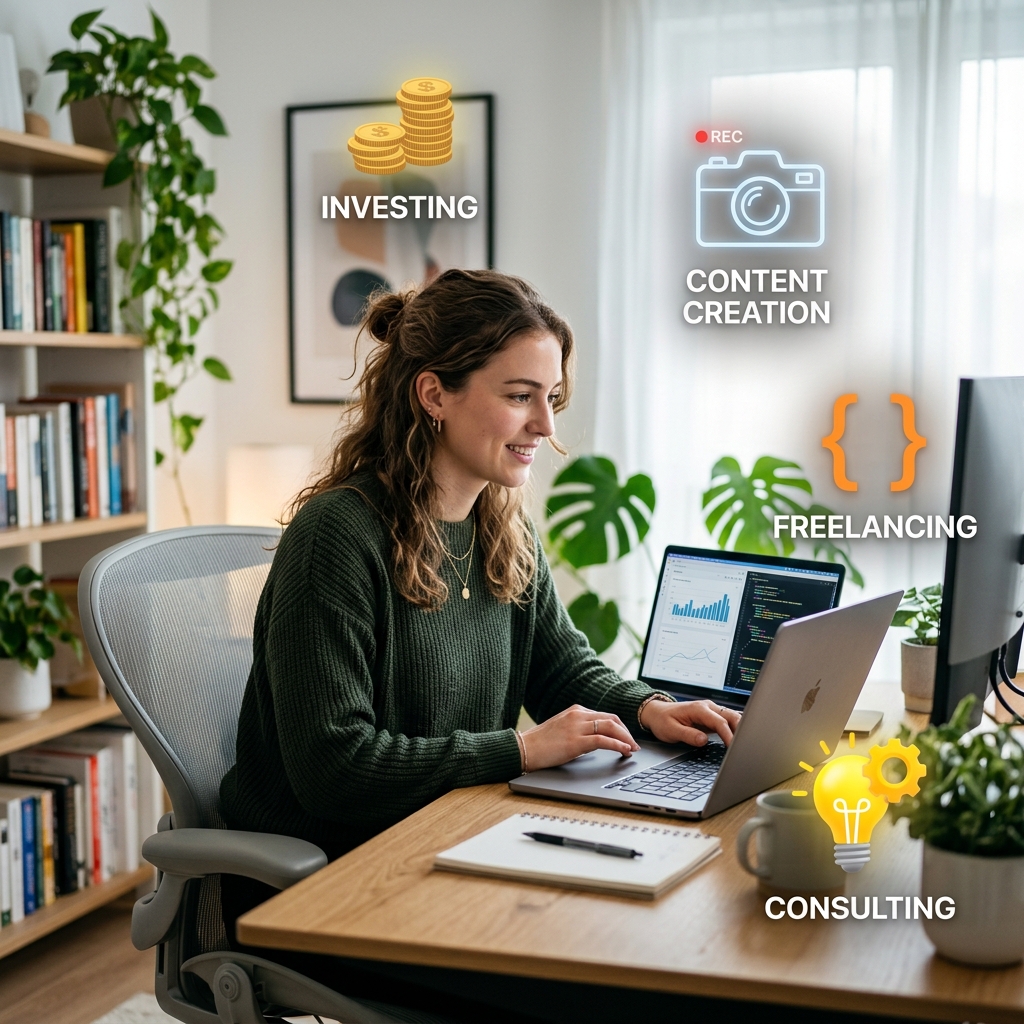
For most of the 20th century, the "One Job, One Paycheck" model was the standard. You worked for 40 years, got a pension, and retired. But in 2026, that model is fundamentally broken. Between inflation, AI-driven automation, and corporate downsizing, a single income stream is a Single Point of Failure.
As a data scientist, I design systems for Resilience. Resilience means having backups. A "High-Value Side Hustle" isn't just about making extra money; it's about building a financial "insurance policy" that you control. If your main job disappears tomorrow, your side hustle ensures you don't have to panic.
🚀 The Income Floor
A side hustle that generates just $1,000 a month provides an "Income Floor" that covers most people's basic survival costs (groceries and utilities). This small buffer changes your relationship with your primary employer from "Desperate" to "Voluntary."High-Value vs. Low-Value Hustles
Not all side hustles are created equal. In 2026, you should avoid "Low-Value" tasks like driving for rideshare apps or doing micro-tasks for pennies. These "trade time for money" at a very low rate and offer no scalability.
A High-Value Side Hustle has three characteristics:
- Skill-Based: It uses your professional expertise (e.g., consulting, coding, design).
- Scalable: It can grow without a linear increase in your hours (e.g., digital products, software, content).
- High Hourly Rate: You should aim for at least 2x your primary job's hourly rate.
The Three Buckets of Income
To build a resilient portfolio, you should aim to have one hustle in each of these "Buckets":
- The Service Bucket (Active): High-end consulting or freelancing. You are selling your brain. This generates immediate cash.
- The Product Bucket (Passive-ish): Creating a course, an eBook, or a software tool. You build it once and sell it thousands of times.
- The Asset Bucket (Passive): Real estate, dividend stocks, or crowdfunded investments. Your money works for you.
Using AI to Leverage Your Time
The biggest challenge to a side hustle is Time. You already have a full-time job and a life. This is where AI becomes your "Unfair Advantage."
In 2026, you can use AI to handle 80% of the "busy work": drafting emails, managing social media schedules, generating initial code snippets, or even analyzing market data. By automating the administrative tasks, you can focus purely on the high-value "creation" that clients actually pay for.
Taxes, Legalities, and LLCs
Once your side hustle starts making more than $1,000 a month, it's time to get professional.
- The LLC: Setting up a Limited Liability Company protects your personal assets from your business liabilities.
- Tax Deductions: Suddenly, your laptop, a portion of your home office, and even your internet bill can become business expenses, lowering your overall tax bill.
- Self-Employment Tax: Remember to set aside 25-30% of every dollar you earn for the IRS. Don't spend your tax money!
🚨 Avoid the 'Side-Hustle Burnout'
Don't try to build three businesses at once. Start with one service-based hustle. Once you have a steady client base, use that income to fund the creation of a product-based hustle. Slow and steady wins the diversification race.Starting Your Second Stream
The best time to start a side hustle was yesterday. The second best time is today. You already have skills that people are willing to pay for—you just need to package them and find your first customer.
Use our Net Worth Calculator to track how your side hustle income accelerates your path to freedom. Diversify your income, protect your future, and stop relying on a single paycheck.
✔️ The Hustler's Roadmap
- Identify your "Superpower" (what you do better than 90% of people).
- Define your service and your price.
- Find your first 3 "Beta" clients.
- Use AI to automate your administrative work.
- Reinvest your profits into "Asset Bucket" investments.

About the Author
Terry is a data scientist and serial entrepreneur who has built multiple six-figure income streams while working a full-time job. He founded Budget With You to help others decouple their time from their income.