In the world of data science, Efficiency is the ultimate metric. It is the ratio of useful output to total input. A system that generates significant waste is, by definition, a poorly designed system.
Unfortunately, the modern consumer lifestyle is designed for maximum waste. From single-use plastics to "fast fashion" and excessive packaging, we are trained to buy, discard, and repeat. In 2026, this cycle isn't just an environmental problem; it's a Financial Leak. By adopting a "Zero-Waste" mindset, you are simply plugging the holes in your financial bucket.
♻️ The Margin of Sustainability
Every item you don't have to buy a second time is a 100% margin gain for your budget. Sustainability is the process of moving from "Consuming" to "Managing" your resources.The Hidden Cost of Waste
The average household throws away over $1,500 worth of food every single year. Add in the cost of single-use household items (paper towels, plastic wrap, disposable water bottles), and you are looking at over $2,000 in "avoidable" spending.
The Zero-Waste Financial Audit:
- Food Waste: 30% of all groceries purchased never reach a human stomach.
- Disposables: The "convenience tax" on paper and plastic products can add $30-$50 to your monthly grocery bill.
- Low-Quality Goods: Buying a $20 pair of shoes that lasts 6 months is 4x more expensive than buying a $100 pair that lasts 10 years (The Vimes 'Boots' Theory of Socioeconomic Unfairness).
Sustainable Grocery Hacking
The grocery store is the primary battleground for zero-waste budgeting.
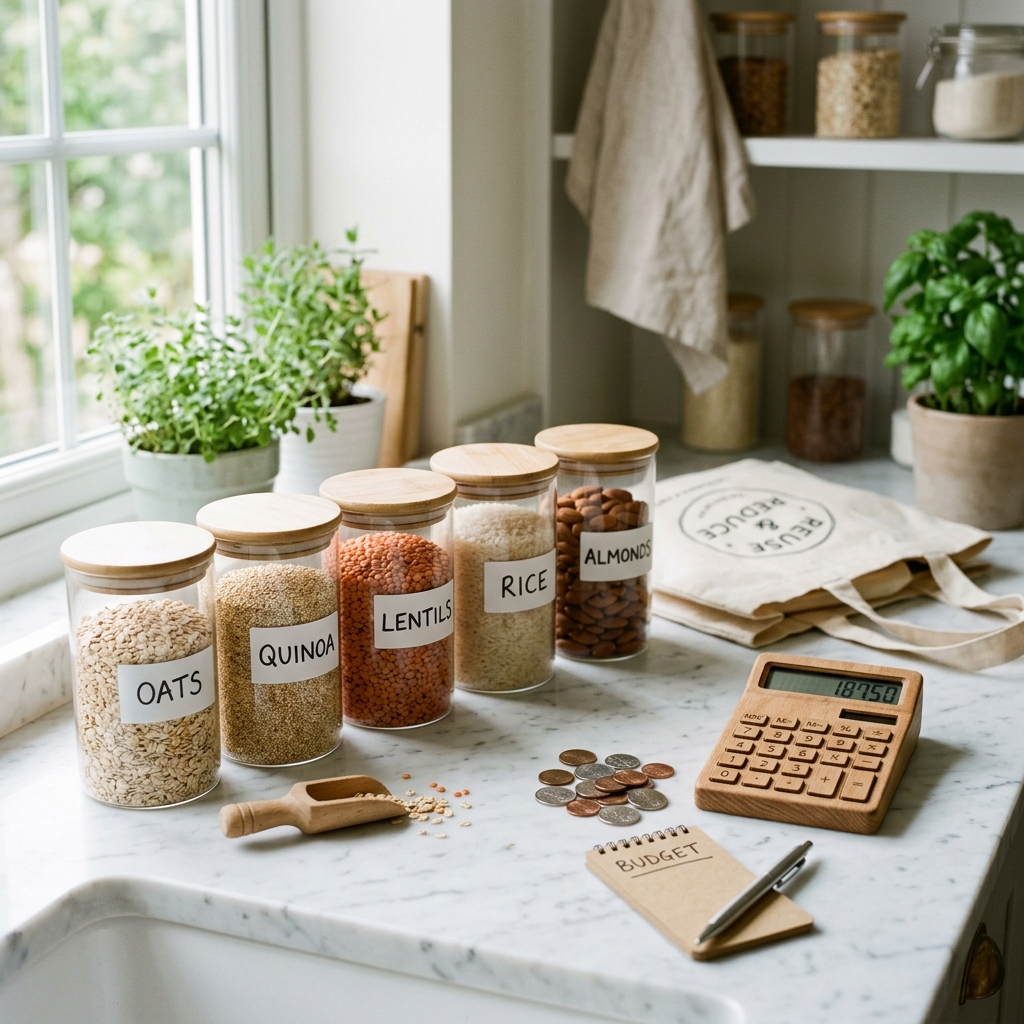
- Bulk Buying: Use the "Bulk Bin" section for grains, nuts, and spices. You save 20-50% by not paying for the branding and packaging.
- Inventory First: Never go to the store without a list based on what is already in your pantry. "Shop your kitchen" first.
- The 'Ugly' Produce: In 2026, apps that sell "misfit" or "ugly" produce at a discount are a goldmine for the zero-waste budgeter. The nutrition is identical, but the price is 30% lower.
Investing in Durable Goods
To live a zero-waste life, you must shift your mindset from Expenses to Assets.
A high-quality stainless steel water bottle is a $30 asset that eliminates a $10/week bottled water expense. A set of silicone food covers replaces years of plastic wrap. A cast-iron skillet is a 100-year asset that replaces a dozen "non-stick" pans that end up in a landfill every few years.
The Home Energy Audit
Sustainability extends to your utilities. Waste isn't just physical; it's also invisible.
- Vampire Power: Electronics that stay plugged in can account for 10% of your energy bill. Smart power strips in 2026 can automatically cut power when devices are in standby.
- The 2-Degree Shift: Adjusting your thermostat by just 2 degrees can save 10% on your heating and cooling costs.
- LED Transition: If you haven't switched to high-efficiency LEDs, you are effectively burning cash in every room of your house.
🚨 Avoid the 'Sustainable' Shopping Spree
Don't go out and buy a bunch of new "eco-friendly" gadgets. The most sustainable item is the one you already own. Use what you have until it breaks, then replace it with a durable, zero-waste alternative.The Virtuous Cycle of Sustainability
Zero-waste budgeting creates a "Virtuous Cycle." By consuming less, you have more money to invest. By investing more, you reach Financial Independence faster. By being independent, you have more time to live a conscious, meaningful life.
Sustainability isn't about deprivation; it's about Optimization. It's about ensuring that every dollar and every resource in your life is used to its maximum potential.
Use our Budget Calculator to see how much you can reclaim by cutting out waste categories. Your wallet and the planet will thank you.
✔️ The Zero-Waste Checklist
- Audit your trash for one week to see where your money is going.
- Replace one single-use item with a durable alternative this month.
- Master the art of "Leftover Transformation" to eliminate food waste.
- Unplug "vampire" electronics when not in use.
- Prioritize quality over price for all physical goods.

About the Author
Terry is a data scientist who believes that efficiency is the key to both financial and environmental health. He founded Budget With You to show that sustainable living is not just good for the planet—it is incredibly good for your wallet.